

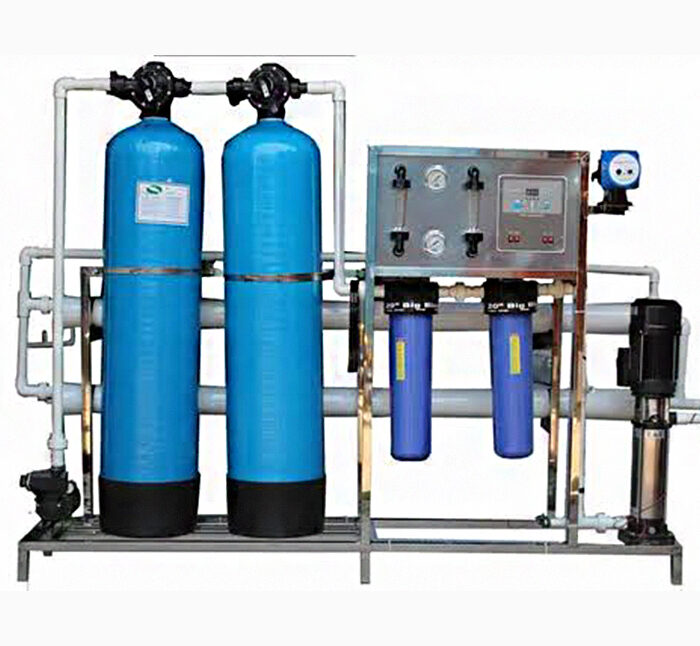
If you are looking for a reliable FRP RO Plant in Ahmedabad, Gujarat, choosing the right reverse osmosis system is essential for producing clean, safe, and high-quality water. FRP RO plants are widely used for commercial, industrial, institutional, and residential water purification applications because of their durability, corrosion resistance, and relatively low maintenance requirements.
Ahmedabad is a rapidly developing industrial and commercial city where water quality and water availability can vary depending on the source. Industrial facilities, hotels, hospitals, schools, offices, housing societies, and manufacturing units often require efficient water treatment systems to reduce dissolved salts, hardness, impurities, and other unwanted contaminants.
A properly designed FRP RO Plant in Ahmedabad can provide an effective solution by using advanced reverse osmosis technology to purify water according to the requirements of the application.
What Is an FRP RO Plant?
An FRP RO Plant is a Reverse Osmosis water purification system that uses FRP (Fiberglass Reinforced Plastic) components, particularly for applications such as pressure vessels and filtration systems. Reverse osmosis works by forcing water through a semi-permeable membrane under pressure.
The RO membrane allows water molecules to pass through while restricting many dissolved salts, minerals, suspended impurities, and other contaminants. The result is purified water suitable for a wide range of applications.
FRP is a popular material in water treatment because it offers good corrosion resistance and is suitable for many water-treatment environments. An FRP-based RO system can be configured according to water quality, required capacity, feed-water conditions, and the intended application.
Why Choose an FRP RO Plant in Ahmedabad?
Water treatment requirements can differ significantly from one location and application to another. An FRP RO plant provides a practical solution for organizations that need consistent purified water.
Some important advantages include:
1. Corrosion Resistance
FRP components are resistant to corrosion and can perform well in water-treatment environments. This makes FRP equipment suitable for applications where conventional materials may require additional protection against corrosion.
2. Efficient Water Purification
Reverse osmosis technology can significantly reduce dissolved solids and various impurities from feed water. The purification performance depends on the feed-water quality, membrane selection, operating pressure, and overall system design.
3. Low Maintenance Requirements
A properly installed and operated FRP RO plant can be relatively easy to maintain. Regular filter replacement, membrane cleaning, pressure monitoring, and water-quality checks help maintain consistent performance.
4. Long Service Life
FRP components are designed for durability and resistance to environmental conditions. With appropriate operation and preventive maintenance, an FRP RO system can provide dependable service for many years.
5. Flexible Capacity Options
FRP RO plants can be designed for different water requirements. Small commercial systems and larger industrial RO plants can be configured based on daily water consumption and production requirements.
Applications of FRP RO Plants
An FRP RO Plant in Gujarat can be used across several industries and commercial applications.
Common applications include:
- Manufacturing industries
- Pharmaceutical and chemical industries
- Textile and dyeing units
- Food and beverage industries
- Hotels and restaurants
- Hospitals and healthcare facilities
- Schools and educational institutions
- Offices and commercial buildings
- Residential societies
- Water treatment facilities
- Laboratories
- Industrial process-water treatment
The required RO capacity should be selected according to the quantity and quality of water required by the facility.
How Does an FRP RO Plant Work?
An FRP RO system generally consists of multiple stages of water treatment. The exact configuration can vary depending on the source water and required water quality.
Step 1: Feed Water
Raw water enters the RO treatment system from the available water source. The water may contain suspended particles, dissolved salts, hardness, organic matter, and other impurities.
Step 2: Pre-Treatment
Pre-treatment protects the RO membrane from excessive fouling and scaling. Depending on the water quality, the system may include multimedia filtration, activated carbon filtration, softening, micron filtration, or other treatment stages.
Step 3: High-Pressure Pump
A high-pressure pump supplies the pressure required for the reverse osmosis process. Proper pressure selection is important for achieving efficient membrane performance.
Step 4: RO Membrane
The pressurized water passes through the RO membrane. The membrane separates purified permeate water from concentrated reject water.
Step 5: Purified Water Collection
The treated water is collected in a clean-water storage tank or supplied directly to the required application, depending on the system design.
Step 6: Reject Water Management
The RO process generates reject or concentrate water. Proper collection, reuse, recycling, or disposal of reject water should be considered during system design.
Key Components of an FRP RO Plant
A typical FRP RO plant may include:
- FRP pressure vessels
- RO membranes
- High-pressure pump
- Raw-water pump
- Multimedia filter
- Activated carbon filter
- Micron cartridge filters
- Control panel
- Flow meters
- Pressure gauges
- Valves and piping
- Storage tanks
- Dosing systems
- Electrical controls
The final equipment configuration should be selected according to feed-water analysis and the required treated-water quality.
Selecting the Right FRP RO Plant
Before purchasing an FRP RO Plant in Ahmedabad, it is important to evaluate several factors.
Water Quality Analysis
A water analysis should ideally be conducted before finalizing the RO plant. Important parameters can include TDS, pH, hardness, alkalinity, conductivity, turbidity, iron, silica, chloride, sulphate, and other relevant contaminants.
Required Capacity
The plant capacity should be based on the required purified-water quantity. RO capacity is commonly specified in litres per hour (LPH) or litres per day (LPD), while larger industrial systems may use cubic metres per hour.
Desired Water Quality
The required permeate-water quality depends on the application. Drinking-water requirements may differ from industrial process-water or specialized applications.
Membrane Selection
Selecting the correct RO membrane is important for purification efficiency, recovery, and operating cost. Membrane selection should consider feed-water characteristics and the required output.
Automation Level
RO plants can be supplied with manual, semi-automatic, or automatic controls. Automated systems can help monitor important operating parameters and simplify routine operation.
Benefits of Installing an FRP RO Plant in Ahmedabad
Businesses and institutions can benefit from installing an appropriately designed RO system.
Consistent water quality: RO treatment helps provide more consistent purified water when properly operated and maintained.
Reduced dissolved solids: Reverse osmosis is highly effective at reducing many dissolved salts and minerals.
Suitable for multiple applications: FRP RO systems can be customized for commercial, institutional, and industrial requirements.
Compact system options: Depending on capacity, RO plants can be designed to fit available installation areas.
Cost-effective operation: Proper pre-treatment and regular maintenance can improve membrane life and help control operating expenses.
FRP RO Plant Maintenance
Regular maintenance is important for maintaining the efficiency and service life of an RO plant.
Important maintenance activities include:
- Checking feed-water and product-water quality
- Monitoring operating pressure
- Checking flow rates
- Replacing cartridge filters when required
- Cleaning RO membranes when necessary
- Inspecting pumps and valves
- Checking electrical connections
- Monitoring membrane performance
- Inspecting pipelines and fittings
- Managing RO reject water properly
The frequency of maintenance depends on feed-water quality, plant operating hours, and system design.
Why Choose a Professional FRP RO Plant Supplier?
Selecting an experienced FRP RO Plant manufacturer or supplier in Ahmedabad can make a significant difference in system performance. A professional supplier should be able to understand the water-treatment requirement, recommend appropriate equipment, provide installation support, and offer after-sales service.
A reliable supplier can also help with water analysis, plant sizing, membrane selection, commissioning, maintenance, and troubleshooting.
Instead of selecting an RO plant based only on its capacity or price, businesses should consider the complete system design, component quality, expected recovery, energy consumption, maintenance requirements, warranty, and service support.
Conclusion
An FRP RO Plant in Ahmedabad, Gujarat can be an effective solution for businesses, industries, institutions, and commercial facilities requiring reliable water purification. With corrosion-resistant FRP components, advanced reverse osmosis membranes, flexible capacity options, and appropriate pre-treatment, these systems can be designed for a wide range of water-treatment requirements.
Before installing an RO plant, it is recommended to analyze the source water and determine the required treated-water quality and daily capacity. A properly designed system combined with regular maintenance can deliver reliable performance and help maintain consistent water quality.
If you are planning to install an FRP RO Plant in Ahmedabad, work with a qualified water-treatment professional who can recommend a system based on your actual water quality, capacity requirements, application, and operating conditions.