
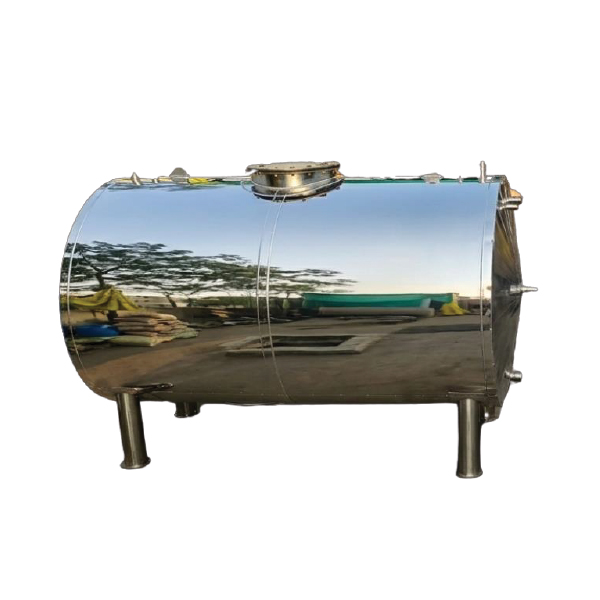
Jacket Tank in Ahmedabad, Gujarat
A Jacket Tank in Ahmedabad, Gujarat is an industrial processing vessel designed for controlled heating, cooling, mixing, and temperature management of liquids, semi-liquids, chemicals, food products, pharmaceutical formulations, cosmetics, and other process materials. Jacketed tanks are widely used in industries where maintaining a specific product temperature is important during manufacturing and processing.
Ahmedabad is one of Gujarat’s major industrial and engineering hubs, with manufacturers supplying stainless steel process equipment, storage tanks, mixing tanks, reactors, and customized fabrication solutions. A stainless steel jacketed tank can be designed according to the required capacity, material grade, operating temperature, pressure, agitation requirements, and production process.
Whether you need a small laboratory-scale tank or a large industrial vessel, selecting the right jacket tank manufacturer in Ahmedabad is important for achieving reliable process performance, easy maintenance, and long service life.
What Is a Jacket Tank?
A jacket tank is a process tank manufactured with an additional chamber, known as a jacket, around part or all of the main tank body. Heating or cooling media can circulate through this jacket to transfer heat to or from the product inside the tank.
Depending on the application, the jacket can use different heating or cooling media, including:
- Hot water
- Chilled water
- Steam
- Thermal oil
- Glycol-based cooling fluids
- Other suitable heat-transfer fluids
The jacket allows manufacturers to control the temperature of the material inside the vessel without directly mixing the heating or cooling medium with the product.
Jacketed tanks are commonly combined with agitators, temperature sensors, control panels, insulation, valves, and other process accessories.
Jacket Tank Manufacturer in Ahmedabad
Choosing an experienced jacket tank manufacturer in Ahmedabad can help industries obtain a tank designed specifically for their production requirements. Manufacturers can customize the vessel according to capacity, material of construction, operating conditions, and process requirements.
A reliable manufacturer should be able to provide:
- Stainless steel or other suitable material construction
- Customized tank capacity
- Heating and cooling jacket
- Agitator or mixer
- Temperature control system
- Insulation
- Suitable valves and fittings
- Manholes and inspection openings
- Drain connections
- Support legs or mounting arrangements
- Customized inlet and outlet connections
- Surface finishing according to application
Before ordering, customers should provide details such as product type, required capacity, working temperature, heating/cooling requirement, viscosity, agitation requirements, and operating pressure.
Types of Jacket Tanks
Jacket tanks can be manufactured in several configurations depending on the process.
1. Stainless Steel Jacket Tank
Stainless steel is widely used for food, pharmaceutical, chemical, cosmetic, and other industrial applications because of its durability, cleanability, and corrosion resistance.
Common stainless-steel grades include SS 304 and SS 316/316L. The appropriate material should be selected based on the product, process conditions, cleaning chemicals, and temperature.
2. Jacketed Mixing Tank
A jacketed mixing tank combines temperature control with mechanical mixing. An agitator continuously mixes the product while the jacket provides heating or cooling.
These tanks are useful for products where uniform temperature and consistent mixing are required.
3. Heating Jacket Tank
A heating jacket tank is designed to increase or maintain the temperature of the product. Hot water, steam, or thermal fluid can circulate through the jacket depending on the process.
4. Cooling Jacket Tank
Cooling jacket tanks are designed to remove heat from the product. Chilled water, glycol, or another appropriate cooling medium can be circulated through the jacket.
5. Insulated Jacket Tank
Insulation can be added around the tank and jacket to reduce heat loss or heat gain. Insulated construction can improve thermal efficiency when maintaining product temperature is important.
Applications of Jacket Tanks
A jacket tank in Ahmedabad, Gujarat can be used across numerous industries.
Food Processing Industry
Jacketed tanks are used for processing and temperature control of products such as:
- Sauces
- Syrups
- Dairy products
- Chocolate
- Edible preparations
- Fruit-based products
- Food ingredients
- Liquid and semi-liquid food products
Pharmaceutical Industry
Pharmaceutical manufacturers can use jacketed vessels for controlled processing, mixing, heating, and cooling of formulations.
Depending on the application, pharmaceutical tanks may require specialized stainless steel grades, surface finishes, sanitary fittings, and cleaning systems.
Chemical Industry
Jacketed tanks can be used for controlled chemical processing where temperature needs to be increased, decreased, or maintained within a specified range.
Cosmetic Industry
Manufacturers of creams, lotions, shampoos, gels, and other cosmetic products can use jacketed mixing tanks for temperature-controlled processing.
Dairy Industry
Jacketed tanks can be used for heating, cooling, mixing, and processing various dairy products. The exact tank design depends on the product and processing stage.
Paint and Adhesive Industry
Jacketed mixing vessels can be used for processing temperature-sensitive formulations, adhesives, coatings, and other viscous products.
Features of Jacket Tanks
Modern jacket tanks can be customized with several features depending on the application.
Temperature Control
The primary function of the jacket is to facilitate controlled heat transfer. Temperature sensors and control systems can be integrated to monitor the product temperature.
Agitation System
An agitator can be installed when the product requires continuous mixing. Different impeller designs can be selected depending on viscosity and mixing requirements.
Stainless Steel Construction
Stainless steel construction provides strength, durability, and corrosion resistance for many process applications.
Customized Capacity
Jacket tanks can be manufactured in different capacities, from smaller tanks for specialized production to large industrial vessels.
Insulation
Insulation can improve thermal efficiency by reducing heat transfer between the jacket and the surrounding environment.
Easy Drainage
The tank can be designed with an appropriate bottom outlet and drain arrangement to facilitate product removal and cleaning.
Customized Fittings
Manufacturers can provide customized nozzles, valves, manholes, sampling ports, sight glasses, temperature sensors, and other fittings according to process requirements.
Benefits of Using a Jacket Tank
Controlled Heating and Cooling
The biggest advantage of a jacketed vessel is the ability to control product temperature during processing.
Improved Product Consistency
When temperature and mixing are properly controlled, the process can achieve greater consistency from one batch to another.
Versatile Industrial Application
Jacket tanks can be adapted for different industries and materials by changing the tank material, agitator, jacket design, and process accessories.
Efficient Processing
Combining heating/cooling and mixing in one vessel can simplify certain manufacturing processes and reduce the need for separate equipment.
Customizable Design
Tank dimensions, capacity, jacket area, agitator type, insulation, fittings, and control systems can be customized.
Long Service Life
When manufactured using suitable materials and maintained correctly, stainless steel jacket tanks can provide long-term industrial service.
How Does a Jacket Tank Work?
The product is filled into the main tank chamber. A heating or cooling medium is then circulated through the jacket surrounding the tank.
If heating is required, hot water, steam, or thermal oil transfers heat through the tank wall into the product.
If cooling is required, chilled water, glycol, or another suitable cooling medium absorbs heat from the product.
An agitator can simultaneously mix the material to promote temperature uniformity throughout the tank.
A temperature sensor can monitor the product temperature, while a control system can regulate the heating or cooling process according to the required operating conditions.
How to Choose the Right Jacket Tank
Before purchasing a jacketed tank in Ahmedabad, consider the following factors:
Tank Capacity
Determine the required working volume and total vessel capacity. The tank should provide sufficient space for mixing and thermal expansion where applicable.
Material of Construction
Select SS 304, SS 316/316L, or another appropriate material according to the product and process conditions.
Operating Temperature
Specify the minimum and maximum product temperatures as well as the required heating or cooling rate.
Jacket Type
The appropriate jacket design depends on the heat-transfer requirement, tank geometry, heating/cooling medium, and operating conditions.
Agitator Selection
For mixing applications, the agitator should be selected based on viscosity, density, batch size, mixing speed, and required mixing performance.
Operating Pressure
If the vessel will operate under pressure or vacuum, the tank must be engineered accordingly. Pressure-rated equipment should be designed and fabricated according to applicable engineering requirements.
Surface Finish
Food, pharmaceutical, and sanitary applications may require specific internal surface finishes and hygienic fittings.
Insulation
Consider insulation when the process requires stable temperature control or reduced heat loss.
Jacket Tank Price in Ahmedabad
The jacket tank price in Ahmedabad depends on the exact specifications and customization requirements.
Important factors affecting the price include:
- Tank capacity
- Stainless steel grade
- Material thickness
- Jacket design
- Heating or cooling medium
- Agitator type
- Motor and gearbox
- Insulation
- Surface finish
- Valves and fittings
- Automation
- Temperature control system
- Pressure requirements
- Customized dimensions
- Installation requirements
For an accurate quotation, provide the manufacturer with the required capacity, product details, operating temperature, pressure, mixing requirements, and desired tank configuration.
Why Choose a Jacket Tank Manufacturer in Ahmedabad, Gujarat?
Ahmedabad has a strong industrial manufacturing ecosystem and is home to engineering companies involved in stainless steel fabrication, process equipment, food-processing machinery, chemical equipment, pharmaceutical equipment, and industrial tanks.
Purchasing from a local jacket tank manufacturer in Gujarat can offer advantages such as easier communication, customized fabrication, installation support, spare parts availability, and after-sales service.
However, customers should evaluate manufacturers based on fabrication quality, material specifications, engineering capability, testing procedures, warranty, documentation, and service support rather than location alone.
Maintenance of Jacket Tanks
Proper maintenance can help extend the operating life of a jacketed vessel.
Recommended maintenance practices include:
- Inspect the jacket and connections regularly.
- Check for leakage from valves, fittings, and joints.
- Inspect agitator components and mechanical seals.
- Monitor motor and gearbox performance.
- Follow suitable cleaning procedures.
- Inspect temperature sensors periodically.
- Check insulation for damage.
- Keep product-contact surfaces clean.
- Follow the manufacturer’s recommended maintenance schedule.
- Carry out appropriate inspections for pressure-rated vessels.
Conclusion
A Jacket Tank in Ahmedabad, Gujarat is a versatile process vessel designed for controlled heating, cooling, mixing, and temperature management. It can be customized for applications in food processing, dairy, pharmaceuticals, chemicals, cosmetics, paints, adhesives, and many other industries.
A properly designed stainless steel jacketed tank can combine efficient heat transfer, controlled processing, hygienic construction, and reliable mixing in a single vessel. When selecting a manufacturer, consider tank capacity, stainless steel grade, jacket configuration, agitator, temperature range, pressure requirements, insulation, fittings, surface finish, and after-sales support.
For businesses looking for a jacketed tank manufacturer in Ahmedabad, obtaining a detailed technical quotation based on the actual production requirements is the best way to select the appropriate tank configuration.
A Jacket Tank in Ahmedabad, Gujarat is an industrial processing vessel designed for controlled heating, cooling, mixing, and temperature management of liquids, semi-liquids, chemicals, food products, pharmaceutical formulations, cosmetics, and other process materials. Jacketed tanks are widely used in industries where maintaining a specific product temperature is important during manufacturing and processing.
Ahmedabad is one of Gujarat’s major industrial and engineering hubs, with manufacturers supplying stainless steel process equipment, storage tanks, mixing tanks, reactors, and customized fabrication solutions. A stainless steel jacketed tank can be designed according to the required capacity, material grade, operating temperature, pressure, agitation requirements, and production process.
Whether you need a small laboratory-scale tank or a large industrial vessel, selecting the right jacket tank manufacturer in Ahmedabad is important for achieving reliable process performance, easy maintenance, and long service life.
What Is a Jacket Tank?
A jacket tank is a process tank manufactured with an additional chamber, known as a jacket, around part or all of the main tank body. Heating or cooling media can circulate through this jacket to transfer heat to or from the product inside the tank.
Depending on the application, the jacket can use different heating or cooling media, including:
- Hot water
- Chilled water
- Steam
- Thermal oil
- Glycol-based cooling fluids
- Other suitable heat-transfer fluids
The jacket allows manufacturers to control the temperature of the material inside the vessel without directly mixing the heating or cooling medium with the product.
Jacketed tanks are commonly combined with agitators, temperature sensors, control panels, insulation, valves, and other process accessories.
Jacket Tank Manufacturer in Ahmedabad
Choosing an experienced jacket tank manufacturer in Ahmedabad can help industries obtain a tank designed specifically for their production requirements. Manufacturers can customize the vessel according to capacity, material of construction, operating conditions, and process requirements.
A reliable manufacturer should be able to provide:
- Stainless steel or other suitable material construction
- Customized tank capacity
- Heating and cooling jacket
- Agitator or mixer
- Temperature control system
- Insulation
- Suitable valves and fittings
- Manholes and inspection openings
- Drain connections
- Support legs or mounting arrangements
- Customized inlet and outlet connections
- Surface finishing according to application
Before ordering, customers should provide details such as product type, required capacity, working temperature, heating/cooling requirement, viscosity, agitation requirements, and operating pressure.
Types of Jacket Tanks
Jacket tanks can be manufactured in several configurations depending on the process.
1. Stainless Steel Jacket Tank
Stainless steel is widely used for food, pharmaceutical, chemical, cosmetic, and other industrial applications because of its durability, cleanability, and corrosion resistance.
Common stainless-steel grades include SS 304 and SS 316/316L. The appropriate material should be selected based on the product, process conditions, cleaning chemicals, and temperature.
2. Jacketed Mixing Tank
A jacketed mixing tank combines temperature control with mechanical mixing. An agitator continuously mixes the product while the jacket provides heating or cooling.
These tanks are useful for products where uniform temperature and consistent mixing are required.
3. Heating Jacket Tank
A heating jacket tank is designed to increase or maintain the temperature of the product. Hot water, steam, or thermal fluid can circulate through the jacket depending on the process.
4. Cooling Jacket Tank
Cooling jacket tanks are designed to remove heat from the product. Chilled water, glycol, or another appropriate cooling medium can be circulated through the jacket.
5. Insulated Jacket Tank
Insulation can be added around the tank and jacket to reduce heat loss or heat gain. Insulated construction can improve thermal efficiency when maintaining product temperature is important.
Applications of Jacket Tanks
A jacket tank in Ahmedabad, Gujarat can be used across numerous industries.
Food Processing Industry
Jacketed tanks are used for processing and temperature control of products such as:
- Sauces
- Syrups
- Dairy products
- Chocolate
- Edible preparations
- Fruit-based products
- Food ingredients
- Liquid and semi-liquid food products
Pharmaceutical Industry
Pharmaceutical manufacturers can use jacketed vessels for controlled processing, mixing, heating, and cooling of formulations.
Depending on the application, pharmaceutical tanks may require specialized stainless steel grades, surface finishes, sanitary fittings, and cleaning systems.
Chemical Industry
Jacketed tanks can be used for controlled chemical processing where temperature needs to be increased, decreased, or maintained within a specified range.
Cosmetic Industry
Manufacturers of creams, lotions, shampoos, gels, and other cosmetic products can use jacketed mixing tanks for temperature-controlled processing.
Dairy Industry
Jacketed tanks can be used for heating, cooling, mixing, and processing various dairy products. The exact tank design depends on the product and processing stage.
Paint and Adhesive Industry
Jacketed mixing vessels can be used for processing temperature-sensitive formulations, adhesives, coatings, and other viscous products.
Features of Jacket Tanks
Modern jacket tanks can be customized with several features depending on the application.
Temperature Control
The primary function of the jacket is to facilitate controlled heat transfer. Temperature sensors and control systems can be integrated to monitor the product temperature.
Agitation System
An agitator can be installed when the product requires continuous mixing. Different impeller designs can be selected depending on viscosity and mixing requirements.
Stainless Steel Construction
Stainless steel construction provides strength, durability, and corrosion resistance for many process applications.
Customized Capacity
Jacket tanks can be manufactured in different capacities, from smaller tanks for specialized production to large industrial vessels.
Insulation
Insulation can improve thermal efficiency by reducing heat transfer between the jacket and the surrounding environment.
Easy Drainage
The tank can be designed with an appropriate bottom outlet and drain arrangement to facilitate product removal and cleaning.
Customized Fittings
Manufacturers can provide customized nozzles, valves, manholes, sampling ports, sight glasses, temperature sensors, and other fittings according to process requirements.
Benefits of Using a Jacket Tank
Controlled Heating and Cooling
The biggest advantage of a jacketed vessel is the ability to control product temperature during processing.
Improved Product Consistency
When temperature and mixing are properly controlled, the process can achieve greater consistency from one batch to another.
Versatile Industrial Application
Jacket tanks can be adapted for different industries and materials by changing the tank material, agitator, jacket design, and process accessories.
Efficient Processing
Combining heating/cooling and mixing in one vessel can simplify certain manufacturing processes and reduce the need for separate equipment.
Customizable Design
Tank dimensions, capacity, jacket area, agitator type, insulation, fittings, and control systems can be customized.
Long Service Life
When manufactured using suitable materials and maintained correctly, stainless steel jacket tanks can provide long-term industrial service.
How Does a Jacket Tank Work?
The product is filled into the main tank chamber. A heating or cooling medium is then circulated through the jacket surrounding the tank.
If heating is required, hot water, steam, or thermal oil transfers heat through the tank wall into the product.
If cooling is required, chilled water, glycol, or another suitable cooling medium absorbs heat from the product.
An agitator can simultaneously mix the material to promote temperature uniformity throughout the tank.
A temperature sensor can monitor the product temperature, while a control system can regulate the heating or cooling process according to the required operating conditions.
How to Choose the Right Jacket Tank
Before purchasing a jacketed tank in Ahmedabad, consider the following factors:
Tank Capacity
Determine the required working volume and total vessel capacity. The tank should provide sufficient space for mixing and thermal expansion where applicable.
Material of Construction
Select SS 304, SS 316/316L, or another appropriate material according to the product and process conditions.
Operating Temperature
Specify the minimum and maximum product temperatures as well as the required heating or cooling rate.
Jacket Type
The appropriate jacket design depends on the heat-transfer requirement, tank geometry, heating/cooling medium, and operating conditions.
Agitator Selection
For mixing applications, the agitator should be selected based on viscosity, density, batch size, mixing speed, and required mixing performance.
Operating Pressure
If the vessel will operate under pressure or vacuum, the tank must be engineered accordingly. Pressure-rated equipment should be designed and fabricated according to applicable engineering requirements.
Surface Finish
Food, pharmaceutical, and sanitary applications may require specific internal surface finishes and hygienic fittings.
Insulation
Consider insulation when the process requires stable temperature control or reduced heat loss.
Jacket Tank Price in Ahmedabad
The jacket tank price in Ahmedabad depends on the exact specifications and customization requirements.
Important factors affecting the price include:
- Tank capacity
- Stainless steel grade
- Material thickness
- Jacket design
- Heating or cooling medium
- Agitator type
- Motor and gearbox
- Insulation
- Surface finish
- Valves and fittings
- Automation
- Temperature control system
- Pressure requirements
- Customized dimensions
- Installation requirements
For an accurate quotation, provide the manufacturer with the required capacity, product details, operating temperature, pressure, mixing requirements, and desired tank configuration.
Why Choose a Jacket Tank Manufacturer in Ahmedabad, Gujarat?
Ahmedabad has a strong industrial manufacturing ecosystem and is home to engineering companies involved in stainless steel fabrication, process equipment, food-processing machinery, chemical equipment, pharmaceutical equipment, and industrial tanks.
Purchasing from a local jacket tank manufacturer in Gujarat can offer advantages such as easier communication, customized fabrication, installation support, spare parts availability, and after-sales service.
However, customers should evaluate manufacturers based on fabrication quality, material specifications, engineering capability, testing procedures, warranty, documentation, and service support rather than location alone.
Maintenance of Jacket Tanks
Proper maintenance can help extend the operating life of a jacketed vessel.
Recommended maintenance practices include:
- Inspect the jacket and connections regularly.
- Check for leakage from valves, fittings, and joints.
- Inspect agitator components and mechanical seals.
- Monitor motor and gearbox performance.
- Follow suitable cleaning procedures.
- Inspect temperature sensors periodically.
- Check insulation for damage.
- Keep product-contact surfaces clean.
- Follow the manufacturer’s recommended maintenance schedule.
- Carry out appropriate inspections for pressure-rated vessels.
Conclusion
A Jacket Tank in Ahmedabad, Gujarat is a versatile process vessel designed for controlled heating, cooling, mixing, and temperature management. It can be customized for applications in food processing, dairy, pharmaceuticals, chemicals, cosmetics, paints, adhesives, and many other industries.
A properly designed stainless steel jacketed tank can combine efficient heat transfer, controlled processing, hygienic construction, and reliable mixing in a single vessel. When selecting a manufacturer, consider tank capacity, stainless steel grade, jacket configuration, agitator, temperature range, pressure requirements, insulation, fittings, surface finish, and after-sales support.
For businesses looking for a jacketed tank manufacturer in Ahmedabad, obtaining a detailed technical quotation based on the actual production requirements is the best way to select the appropriate tank configuration.