
Water treatment systems require the right chemicals to maintain performance, protect equipment, and achieve consistent water quality. RO antiscalant, pH booster, and aluminium sulfate are important chemicals used in different stages of water and wastewater treatment. Choosing reliable products and a dependable manufacturer can help industries improve treatment efficiency and maintain their systems properly.
If you are searching for an RO Antiscalant, pH Booster & Aluminium Sulfate Manufacturer in Ahmedabad, Gujarat, it is important to consider product quality, application requirements, dosage guidance, packaging, consistency, and technical support. These factors can directly influence the performance and operating cost of a water treatment plant.
Ahmedabad and other industrial areas across Gujarat have a strong demand for water-treatment solutions because of the requirements of manufacturing, commercial facilities, infrastructure, and industrial water-processing applications. A reliable chemical manufacturer can help businesses select suitable treatment products according to their specific water quality and system requirements.
What Are RO Antiscalant, pH Booster and Aluminium Sulfate?
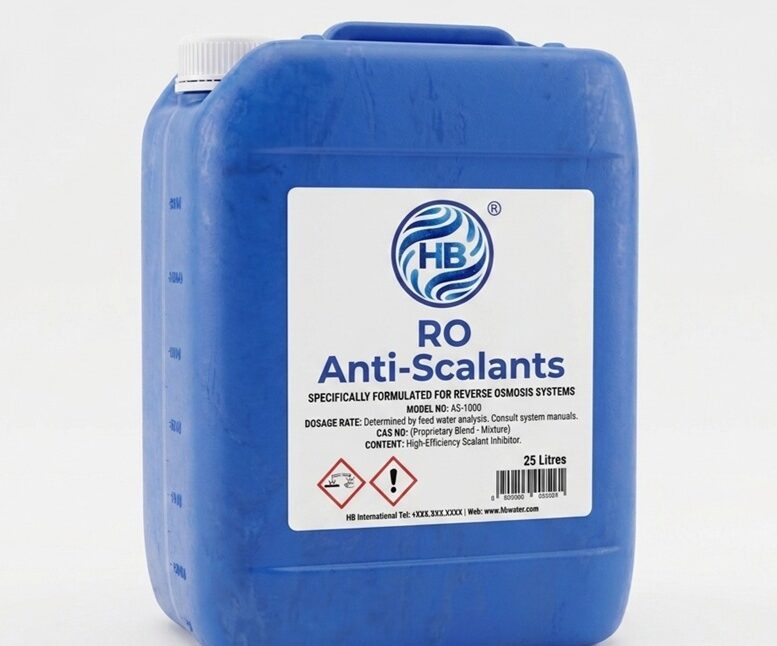
the formation and deposition of mineral scale on RO membranes. Scaling can affect membrane performance, increase pressure requirements, reduce permeate production, and contribute to more frequent cleaning requirements.
The appropriate antiscalant should be selected according to the feed-water chemistry, membrane system, operating conditions, and expected contaminants. Proper dosing is also important because excessive or insufficient chemical dosing may affect treatment performance.
pH Booster
A pH booster is used to increase or adjust the pH of water when the treatment process requires a higher pH level. pH control is important in many water-treatment processes because chemical reactions, coagulation, filtration, and other treatment stages can depend on maintaining an appropriate pH range.
The correct product and dosage should be determined based on the water chemistry and treatment process.
Aluminium Sulfate
Aluminium sulfate, commonly known as alum, is widely used as a coagulant in water-treatment applications. It can help destabilize suspended particles so they can combine into larger flocs that are easier to remove through subsequent clarification or filtration processes.
The required dosage depends on the characteristics of the raw water, including turbidity, suspended solids, organic matter, alkalinity, and other water-quality parameters.
Why Are These Chemicals Important in Water Treatment?
Water-treatment chemicals support different stages of the treatment process. Using appropriate chemicals can help improve system performance and make treatment processes more manageable.
Key benefits include:
- Supporting effective water-treatment processes
- Helping control membrane scaling in RO systems
- Supporting pH adjustment
- Improving coagulation performance
- Helping remove suspended particles
- Protecting water-treatment equipment
- Supporting consistent treatment results
- Potentially reducing operational problems when correctly selected and dosed
However, chemical performance depends on the specific application. A product suitable for one water source may not necessarily be appropriate for another.
Benefits of Using RO Antiscalant
Reverse osmosis membranes are sensitive to scaling caused by dissolved minerals under certain operating conditions. Scale deposits can reduce membrane efficiency and increase the pressure required to maintain production.
An appropriate RO antiscalant can help:
Reduce Scale Formation
Antiscalants are formulated to control or inhibit the formation of certain mineral deposits under suitable operating conditions.
Support Membrane Performance
Controlling scale can help maintain the effective operation of RO membranes and support consistent water production.
Reduce Cleaning Requirements
When scaling is properly controlled, the frequency of membrane cleaning may potentially be reduced, depending on the overall feed-water quality and system operation.
Support Operating Efficiency
Effective pretreatment and chemical dosing can help an RO plant operate more reliably.
For best results, antiscalant selection should be based on water analysis, membrane manufacturer recommendations, and the actual operating conditions of the RO system.
Role of pH Booster in Water Treatment
pH is one of the important parameters monitored during water treatment. Depending on the source water and treatment process, pH adjustment may be required to create suitable conditions for chemical reactions or downstream treatment stages.
A pH booster can support:
- pH correction
- Process optimization
- Chemical treatment control
- Coagulation or precipitation processes where applicable
- Better consistency in treatment operations
Instead of choosing a chemical solely based on its name, industries should evaluate the required pH range, water chemistry, process design, and dosing method.
Aluminium Sulfate for Coagulation
Aluminium sulfate is commonly used in conventional water-treatment processes as a coagulant.
When added under appropriate conditions, it can help destabilize suspended particles. These particles can then form larger flocs, which can subsequently be separated through sedimentation, clarification, or filtration.
The coagulation process generally involves:
- Chemical dosing – Aluminium sulfate is added to the water at a controlled dosage.
- Rapid mixing – The chemical is dispersed throughout the water.
- Flocculation – Destabilized particles combine to form larger flocs.
- Clarification – Flocs settle or are separated from the treated water.
- Filtration – Remaining particles can be removed through an appropriate filtration stage.
Actual dosage and operating conditions should be established through water testing and suitable treatment-process evaluation.
Applications of Water Treatment Chemicals
RO antiscalants, pH adjustment chemicals, and aluminium sulfate can be used across different water-treatment applications.
Potential applications include:
- Reverse osmosis plants
- Industrial water-treatment systems
- Water purification plants
- Wastewater treatment systems
- Commercial water-treatment facilities
- Process-water treatment
- Pretreatment systems
- Clarification systems
- Industrial filtration processes
The appropriate chemical depends on the water source, treatment objective, equipment design, and operating conditions.
How to Choose a Manufacturer in Ahmedabad, Gujarat
Selecting the right RO Antiscalant, pH Booster & Aluminium Sulfate Manufacturer in Ahmedabad, Gujarat requires more than comparing prices.
Consider the following factors:
1. Product Consistency
Consistent product quality is important for predictable dosing and treatment performance.
2. Application Knowledge
A manufacturer or supplier should understand the intended application and provide suitable product information.
3. Technical Documentation
Ask for relevant technical information, specifications, safety documentation, and handling instructions where applicable.
4. Packaging Options
Packaging should be appropriate for transportation, storage, handling, and the customer’s consumption requirements.
5. Technical Support
Water chemistry can vary considerably between sites. Technical assistance can help businesses understand product selection, dosing, and application requirements.
6. Supply Reliability
Industrial water-treatment operations often require regular chemical supplies. A dependable manufacturer should be able to support consistent procurement according to agreed requirements.
7. Custom Requirements
Some applications may require specific chemical characteristics or formulations. Discuss your water-treatment process and technical requirements with the manufacturer before placing an order.
Why Ahmedabad Is an Important Hub for Water Treatment Chemicals
Ahmedabad is one of Gujarat’s major industrial and commercial centers. The city and surrounding industrial areas have businesses operating across manufacturing, engineering, pharmaceuticals, textiles, food processing, chemicals, and other sectors.
Many of these industries require water-treatment systems for process water, utility water, wastewater management, or reuse applications. This creates demand for reliable water-treatment chemicals and technical support.
Choosing an Ahmedabad-based manufacturer can also provide logistical advantages for customers in Gujarat, depending on the supplier’s distribution network and delivery capabilities.
Best Practices for Using Water Treatment Chemicals
Correct chemical selection is only one part of successful treatment. Proper handling, dosing, storage, and monitoring are equally important.
Businesses should:
- Test the source water regularly.
- Determine chemical requirements based on actual water chemistry.
- Follow recommended dosage guidelines.
- Monitor pH and other relevant treatment parameters.
- Inspect RO membranes and pretreatment equipment.
- Store chemicals according to product-specific safety requirements.
- Train personnel in safe chemical handling.
- Maintain appropriate records of chemical consumption.
- Review treatment performance regularly.
Avoid increasing chemical dosage without understanding the underlying water-treatment problem. A higher dosage does not automatically mean better treatment.
Common Mistakes to Avoid
Industries can experience unnecessary treatment problems when chemicals are selected or used incorrectly.
Common mistakes include:
- Selecting chemicals only based on price
- Using the same dosage for different water sources
- Not performing water analysis
- Ignoring RO feed-water chemistry
- Failing to monitor pH
- Incorrect chemical dosing
- Poor chemical storage
- Not following equipment or membrane manufacturer recommendations
- Ignoring changes in raw-water quality
A proper water-treatment evaluation can help determine the appropriate product and dosing strategy.
Choose the Right Water Treatment Chemical Manufacturer
Water-treatment chemicals play an important role in maintaining treatment performance and process reliability. RO antiscalant can help manage scaling risks in suitable reverse osmosis applications, pH boosters can support pH adjustment, and aluminium sulfate can assist coagulation and clarification processes.
For industries looking for an RO Antiscalant, pH Booster & Aluminium Sulfate Manufacturer in Ahmedabad, Gujarat, the best approach is to evaluate product consistency, technical specifications, application support, supply reliability, and overall service rather than focusing only on the purchase price.
Before selecting a product, assess your water quality, treatment process, equipment configuration, and chemical requirements. Working with a knowledgeable manufacturer can help your business select products appropriate for its specific water-treatment application and operating conditions.
Conclusion
Efficient water treatment depends on the right combination of equipment, process design, monitoring, and chemical management. RO antiscalants, pH boosters, and aluminium sulfate each have specific roles and should be selected according to the treatment objective and water chemistry.
Whether you operate an RO plant, industrial water-treatment system, wastewater-treatment facility, or clarification process, choosing reliable water-treatment chemicals can contribute to consistent plant operation.
If you are sourcing an RO Antiscalant, pH Booster & Aluminium Sulfate Manufacturer in Ahmedabad, Gujarat, compare technical specifications, quality, application suitability, support, and supply capability before making your final decision.