

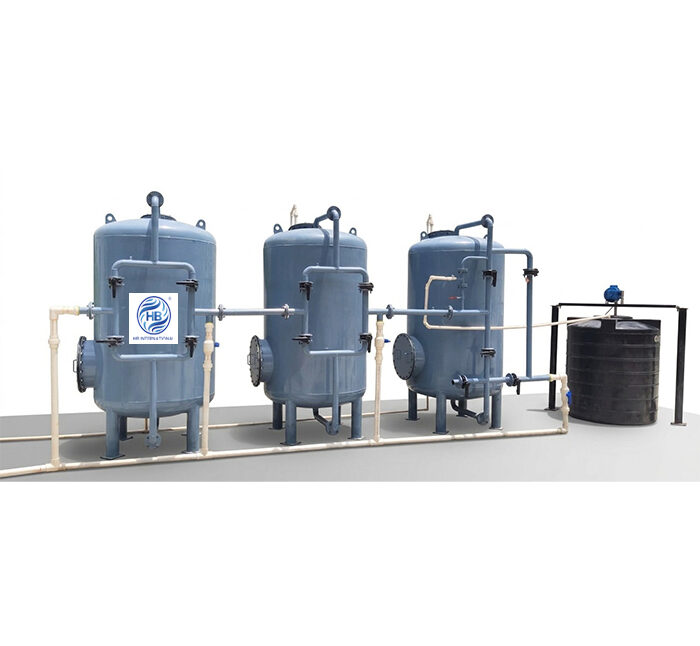
Water quality plays an important role in industrial operations, commercial facilities, and water treatment plants. Hard water, suspended particles, and unwanted contaminants can affect equipment performance, increase maintenance requirements, and reduce the efficiency of water-treatment systems. Choosing the right water-treatment equipment manufacturer is therefore essential for businesses that need reliable and practical solutions.
If you are searching for the best softener, UF technology and MS vessel manufacturer in Ahmedabad, it is important to select a supplier that understands different water-treatment requirements and can provide equipment suited to your application. Water softeners, ultrafiltration systems, and MS vessels are commonly used as part of water-treatment solutions for industrial and commercial applications.
Ahmedabad and Gujarat have a strong industrial base, creating growing demand for dependable water-treatment equipment. A professional manufacturer can help businesses select appropriate systems based on water quality, flow requirements, plant capacity, operating conditions, and application needs.
Why Water Treatment Equipment Is Important
Water used in industrial processes may contain hardness, suspended solids, organic matter, and other impurities. Depending on the source and application, untreated or inadequately treated water can create operational challenges.
Common problems associated with unsuitable water quality include:
- Scaling inside pipes and equipment
- Reduced heat-transfer efficiency
- Increased maintenance requirements
- Clogging of downstream systems
- Shorter equipment operating life
- Higher chemical and cleaning requirements
- Inconsistent water quality
A properly designed treatment system can help address these challenges and provide water that is more suitable for the intended application.
This is why businesses should consider water-treatment equipment as an important part of their overall plant infrastructure.
Water Softener Systems for Hard Water Treatment
A water softener is designed to reduce hardness-causing minerals, particularly calcium and magnesium, from water. Hard water can contribute to scale formation in pipelines, boilers, heat exchangers, and other equipment.
Water softeners are commonly considered for applications where hardness control is important.
Benefits of Water Softeners
A properly selected water softener can help:
- Reduce scale formation
- Protect downstream equipment
- Improve operational efficiency
- Reduce maintenance requirements
- Support better performance of water-treatment systems
- Improve the suitability of water for specific industrial applications
The appropriate softener capacity depends on factors such as raw-water hardness, flow rate, daily water consumption, regeneration requirements, and operating conditions.
Therefore, businesses should not select a softener based only on its physical size. Proper system sizing is important for reliable performance.
What Is UF Technology?
UF, or ultrafiltration, is a membrane-based water-treatment technology used to separate suspended solids, colloids, and other larger contaminants from water.
Unlike conventional filtration methods, UF uses a membrane barrier with very fine pores. Depending on the system configuration and membrane characteristics, ultrafiltration can be used as a pretreatment or water-treatment step in different industrial applications.
UF technology is particularly useful where consistent filtration performance and reduced suspended solids are important.
Key Advantages of UF Technology
Ultrafiltration systems can offer several advantages, including:
- Effective removal of suspended particles
- Consistent filtration performance
- Compact system design
- Reduced dependence on conventional clarification methods in suitable applications
- Suitable pretreatment for downstream membrane systems
- Better control of feed-water quality
UF system performance depends on raw-water characteristics, membrane selection, operating pressure, pretreatment, cleaning procedures, and system design.
For this reason, professional engineering and correct membrane selection are important when installing a UF system.
MS Vessels for Water Treatment Applications
MS, or mild steel, vessels are commonly used in water-treatment plants as equipment housings or pressure vessels for suitable filtration and treatment applications.
An MS vessel can be designed to accommodate different filtration media or treatment configurations according to the requirements of the water-treatment system.
Depending on the application, MS vessels may be used with systems involving:
- Sand filtration
- Activated carbon filtration
- Multimedia filtration
- Water softening
- Industrial water treatment
- Pretreatment systems
The appropriate vessel dimensions, material thickness, internal components, pressure rating, and coating requirements should be selected according to the intended application.
Benefits of Choosing a Professional Manufacturer in Ahmedabad
Selecting a reliable softener, UF technology and MS vessel manufacturer in Ahmedabad can provide several advantages for industrial and commercial buyers.
1. Application-Based Equipment Selection
Different industries have different water-treatment requirements. A professional manufacturer can assess the application and recommend equipment according to water quality, flow rate, capacity, and treatment objectives.
2. Better System Compatibility
Water-treatment equipment often works as part of a complete treatment train. Softening, filtration, UF, RO, storage, and other treatment stages may need to work together.
A manufacturer with experience across different water-treatment technologies can help businesses consider system compatibility.
3. Local Industrial Support
For businesses operating in Ahmedabad and across Gujarat, working with a regional manufacturer can simplify communication, site coordination, installation planning, and after-sales support.
4. Customized Solutions
Industrial plants often have different space, capacity, and water-quality requirements. A suitable manufacturer can develop or configure equipment according to project specifications rather than relying only on standard solutions.
Applications of Softener, UF and MS Vessel Systems
Water-treatment equipment can be used across various industries and facilities.
Typical applications may include:
- Pharmaceutical industries
- Food and beverage plants
- Textile industries
- Chemical industries
- Manufacturing facilities
- Hotels and commercial buildings
- Hospitals and institutions
- Industrial process-water treatment
- Boiler-feed-water pretreatment
- RO pretreatment systems
The correct equipment depends on the quality of incoming water and the desired treated-water specifications.
How to Choose the Best Water Treatment Equipment Manufacturer
Choosing a manufacturer requires more than comparing prices. Before placing an order, evaluate several important factors.
Understand Your Water Quality
Start with a water analysis report. Parameters such as hardness, TDS, turbidity, pH, suspended solids, iron, and other contaminants can influence equipment selection.
Determine Required Capacity
Calculate the required flow rate and daily water demand. Equipment that is too small may not meet demand, while unnecessarily oversized equipment can increase capital and operating costs.
Check Construction Quality
For MS vessels, pay attention to fabrication quality, material specifications, vessel dimensions, internal distribution arrangements, surface treatment, and coating.
Evaluate UF Membrane Requirements
For UF systems, consider membrane type, membrane area, operating conditions, pretreatment requirements, cleaning procedures, and expected feed-water quality.
Consider After-Sales Service
Water-treatment equipment requires proper operation and maintenance. Ask the manufacturer about installation support, commissioning, spare parts, technical assistance, and maintenance guidance.
Compare Total Value
The lowest initial quotation is not always the most economical choice. Consider equipment quality, expected operating life, energy and chemical requirements, maintenance, service support, and overall ownership cost.
Common Mistakes to Avoid
Businesses should avoid selecting water-treatment equipment without understanding their actual requirements.
Common mistakes include:
- Buying equipment without water analysis
- Choosing capacity based only on price
- Ignoring operating conditions
- Selecting unsuitable filtration media
- Not considering pretreatment requirements
- Overlooking maintenance requirements
- Failing to evaluate after-sales support
- Not checking compatibility with existing equipment
A professional technical consultation before purchase can help prevent these issues.
Why Ahmedabad Is an Important Location for Water Treatment Equipment
Ahmedabad is one of Gujarat’s major industrial and commercial centers. Its diverse manufacturing base creates demand for water-treatment systems across multiple sectors.
Businesses located in Ahmedabad, Sanand, Vatva, Naroda, Changodar, and surrounding industrial areas may require solutions for process water, filtration, softening, pretreatment, and wastewater-related applications.
Choosing an experienced local or regional manufacturer can make it easier to discuss project requirements and coordinate equipment supply, installation, and service.
Conclusion
Selecting the right water-treatment equipment is an important decision for businesses that depend on reliable water quality. Water softeners, UF technology, and MS vessels can play valuable roles in suitable water-treatment and pretreatment systems.
If you are looking for the best softener, UF technology and MS vessel manufacturer in Ahmedabad, focus on technical expertise, equipment quality, customization capabilities, system compatibility, and after-sales support rather than price alone.
A reliable manufacturer should understand your raw-water characteristics, required capacity, treatment objectives, and operating conditions before recommending equipment. With the right system design and properly selected components, businesses can build a more dependable water-treatment setup suited to their operational needs.